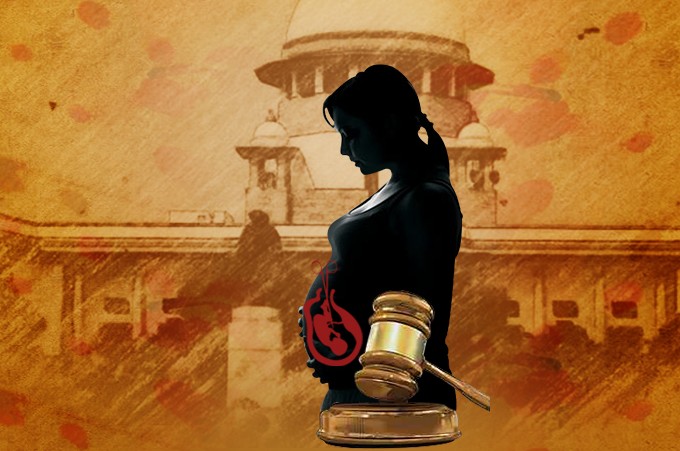






In the late 1980s, when we had the first indications that technology was being used to ensure that girls were not born, a few people made rather prescient predictions about the future. They predicted that women would face much greater violence. They suggested that women would be trafficked.
These campaigners against sex-selective abortions were condemned as scare-mongerers. They were told they were exaggerating to make a point. Fewer women would mean a greater demand for them. That instead of dowry, women could demand a higher price for marriage.
Realities now
We know now that the opposite has happened. Many of the dire predictions made in the 1980s are coming true. In the states where sex selection is most rampant, there are entire villages where the men cannot find women to marry. So they are 'buying' women from other states. And in some instances, where the family can afford to buy just one woman, she is expected to 'service' all the men in the family.

 An increasing number of studies and reports are now
revealing that this is happening not just in Punjab
and Haryana, the states with the worst sex ratios but
also in some districts of Uttar Pradesh. It is
possible that such incidents could be occurring in
other states as well but have not yet been reported.
An increasing number of studies and reports are now
revealing that this is happening not just in Punjab
and Haryana, the states with the worst sex ratios but
also in some districts of Uttar Pradesh. It is
possible that such incidents could be occurring in
other states as well but have not yet been reported.
The 2001 census was a wake-up call. It exposed the damning Indian reality of falling sex ratios in the 0-6 years age group. The national average stood at 927 girls to 1,000 boys. Since then some efforts have been put in place to implement the law to check sex-selective abortions and to encourage parents with girls. But clearly, so far, the impact of such policies has not made a difference. The Third National Family Health Survey has revealed that five years later, the sex ratio in the age group has fallen to 918.
Meanwhile, according to recent reports, in villages in Uttar Pradesh and Haryana, women are being sold as 'wives' for as little as Rs.3,000. Impoverished women from Bihar, West Bengal, Orissa and Jharkhand are finding themselves in households where they do not speak the same language as their 'husbands' who have paid for them. They are expected to clean, cook and procreate. Ideally, they should bear boys. If they have girls, they have several reasons to worry. For one, girls in these villages are unwelcome. Second, in villages full of men, many of who cannot find women to marry, girls are unsafe. They cannot be sent out of the house alone. And even within the household, they have to be protected.
In some villages in Punjab, however, all the men in a household have access to the bought bride. She has no choice. Even if she is married to one brother, she must be available to all the other brothers in the house. Thus, polyandry exists, particularly in poor households where only one man can 'buy' a wife. Studies suggest that this is happening in the cotton growing districts of the state. Once prosperous, crop failures have led to an acute economic crisis for many farming families. Suicides have been reported similar to those witnessed in Vidarbha and Andhra Pradesh. Sex selection has ensured that there are too few local women available. And poverty has dictated that only those with money can 'buy' a woman.
Ironies
How ironical it is that just when Indians are patting themselves on the back on having the richest man in the world in their midst, when the middle classes are celebrating the rising stock market, when the media is openly promoting two Bollywood blockbusters as if they were essential news, girls are being killed, women are being bought and girls and women have to fear for their lives in many parts of this country. This reality should cancel out the euphoria. But it barely makes a dent. It touches our consciences for a moment and then recedes.
What should be done? In the states where the trend of eliminating girls has reached its peak, there is a social emergency. It must be tackled on all fronts. It should be a high priority not just for those state governments but also for the country. For, what happens in Punjab, Haryana and UP today could take place in any other part of India tomorrow.
But more than enforcing laws, and making sure they are effective, we have to work harder on the more intangible and deeper problem of prejudice and perceptions. Some believe that we will be a less biased society, and that caste, gender and communal divisions will be flattened out as we become more prosperous. Yet, sex selection has clearly shown that prosperity enhances and deepens inherent prejudices and provides the resources to act upon them. It is no coincidence that the most prosperous districts have the lowest sex ratios.
Changing perceptions
Can the media do anything to change perceptions? To some extent it can, although the reasons for son-preference are complex. A recent survey of advertisements, for instance, revealed that the majority of ads using a popular icon, like a sports personality or a film star to endorse a product, used little boys. These boys were not chosen on the basis of their looks. They had to be 'cute' and 'smart'. On the other hand, when little girls appeared in ads, they had to be pretty. You could not find a dark girl or a plump girl in any ad. Furthermore, most family images comprised man, woman, boy or man, woman, boy and girl. Rarely did you see a family with just one girl, or with two girls.
These are subtle normative messages that sit on top of accepted perceptions and reinforce them. You can never prove this because it is imperceptible. But if we have to change perceptions, or at least believe we should, then a deliberate attempt has to be made not to reflect popular perceptions but to try and alter them in some way.