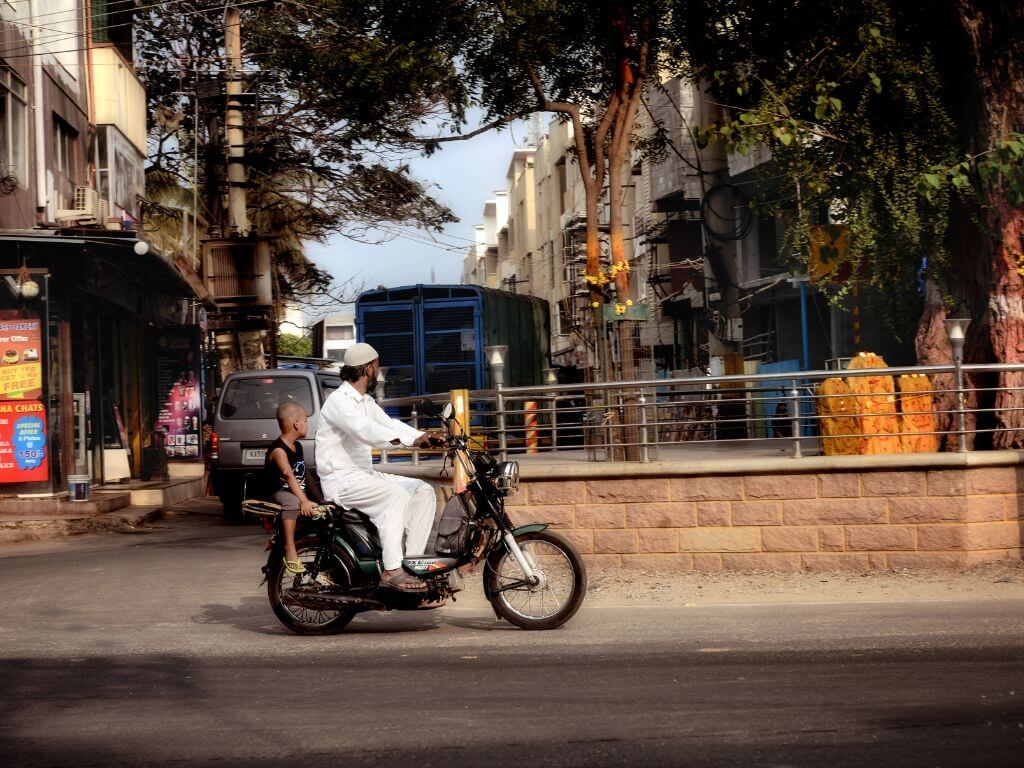






The city I live in has two names, these captured in the title of the first chapter of Janaki Nair's fine recent book on the city's history: Bengaluru/Bangalore. As Nair explains, the first name refers to the older part of the city, which has had a more-or-less continuous existence since the 16th century; the second to the 'cantonment' established by the British 300 years later. Both names have long been in use, one preferred by the Kannada speakers of the old town, the other by the more polyglot communities of the cantonment.
Now, however, the mother of all rows has broken out over the state government's decision to make 'Bengaluru' the city's formal, official name to be used in government correspondence, in office and residential addresses, by the press, by commercial organizations, and by airlines and airports too. The criticisms of the renaming are various. Some say that since 'Bangalore' is now an international city, internationally known by this name, any change will adversely affect its character, image and economic prospects. Others say that while 'Bangalore' trips easily off the tongue, the new name is clumsy and hard to pronounce. Still others worry that this will initiate a wider process of cultural chauvinism, beginning with streets being renamed after local Kannada heroes, and ending with a call for all non-Kannadigas to leave the city.

•
Bangalore: Whither the future?
•
Envisioning a different city
 The critics are, almost to the last man, residents of the cosmopolitan part of the city. They see the renaming as a shameless act of populism, whereby the state government seeks to deflect attention from the urgent problems it seems incapable of addressing such as the appalling condition of the roads, the scarcities of water and power, and the hazards posed by poor sanitation and uncollected garbage.
It is undoubtedly the case that Indian politicians find it far easier to appeal to cultural pride than to effect substantive economic or social change. The Ram Mandir campaign helped no one and hurt many, yet for years on end the politics of one of India's leading parties was determined by it. As chief minister of Uttar Pradesh, Mayawati built Ambedkar's statues and consecrated Ambedkar parks; this when the Dalits in whose name these actions were taken would have been better served by decent schools and hospitals, and by employment-generating economic growth.
It is also undoubtedly the case that the coalition government now in power in Karnataka has had a rather undistinguished record. Forget Bangalore and its problems, this government has done precious little for the rural sector either. The government brings together MLAs from the Congress and the Janata Dal (Secular). The chief minister, Dharam Singh, is a Congressman, but it is pretty clear that the coalition's eminence grise, and the power behind the throne, is the former prime minister, H.D. Deve Gowda. Deve Gowda has recently re-positioned himself as a champion of the interests of the common man, as distinct from the 'elitist' IT sector which drives much of Bangalore's economy. These claims would have carried more conviction if the government which he remote-controls had built roads, brought water, or provided reliable electricity to the urban poor in Bangalore, or indeed to the rural communities who still constitute the bulk of the state's population.
Unable or unwilling to bring about meaningful rural or urban development, the Karnataka government has taken recourse to this symbolic act of renaming Bangalore. The decision was made now, rather than earlier or later, because this happens to be the 50th anniversary of the founding of the state. Karnataka was formed on November 1, 1956, by bringing together, in one territorial and administrative unit, Kannada-speaking areas which in colonial times were distributed among four distinct political regimes the Madras and Bombay Presidencies, and the princely states of Mysore and Hyderabad. It was at a meeting convened by the chief minister to discuss how the jubilee might be celebrated, that some Kannada writers made the suggestion that the state's capital should henceforth be known by its proper, that is Kannada, name.
The renaming of Bangalore as Bengaluru may thus be viewed as part of the unfinished business of linguistic nationalism. The act draws upon a deep well of cultural sentiment, or one should perhaps say resentment. For while Bangalore is the capital of a state created for and by Kannada speakers, in the city as a whole, Kannada speakers are a minority less than 30 per cent, according to some estimates. Furthermore, the city's new wealth has been created (and enjoyed) chiefly by people who speak not Kannada but Tamil, Gujarati, Hindi and (perhaps especially) English. This is a city divided as much by culture as by class. In Bangalore, the Kannada speaker feels beleaguered, demographically; and he feels left out, economically.
Those who have supported the city's renaming point to precedent. When we have gotten used to 'Kolkata' and 'Chennai',
even to 'Thiruvananthapuram', how long will it take us to unselfconsciously refer to this place as 'Bengaluru'? Those examples are all valid, but the one that most closely approximates the present case is the renaming of 'Bombay' as 'Mumbai', for even had their cities not been rechristened, Tamilians would have still been dominant in Madras, Bengalis in Calcutta, and Malayalis in Trivandrum. However, in Bombay, as in Bangalore, the speakers of the local language, in a city that is the capital of a state formed expressly to protect speakers of that language, are in a minority as well as in a position of relative disadvantage (from the point of view of wealth creation). It was this twin marginalization of the Marathi-speaker that once provided the impetus for the Shiv Sena movement. The question that confronts us is this will Bengaluru/Bangalore also now witness a popular social movement aimed at, if not driving away the 'outsider', at least at putting him in his place?
The line between cultural assertion and chauvinism is a very thin one. I myself feel that the demand for renaming Bangalore is legitimate, and should be honoured. Calling the city 'Bengaluru' is consistent with history and custom, and it hurts no one. And, as with Mumbai/ Bombay, while the official name will now be Bengaluru, the other and equally legitimate name, Bangalore, will continue to be used in popular discourse. However, Kannada activists have at times made demands that are less legitimate. One such was the attempt to place restrictions on theatres in Bangalore showing films in languages other than Kannada. Another is the push for job reservation in private companies for 'sons of the soil'. These demands are violative of individual rights as well as of the federal principle; they undermine both democracy and national unity.
Curiously enough, in the years since they successfully renamed Bombay 'Mumbai', the Shiv Sena has itself experienced a decline in political influence. Did the renaming then take the sting out of Marathi chauvinism? The interpretation is perhaps plausible, and certainly reassuring. With luck, my city's new old name will successfully satisfy Kannada pride, and act as a brake on its close cousin, Kannada chauvinism.