





Two years after Mintar Singh and his 36 accomplices had poached and killed 8 lions in different ranges of the Gir National Park, he was arrested on 10 May near Panna in Madhya Pradesh. His movements were being tracked by the inspectors and volunteers of the Wildlife Protection Society of India. The latter tipped off the MP Police leading to Singh's arrest.
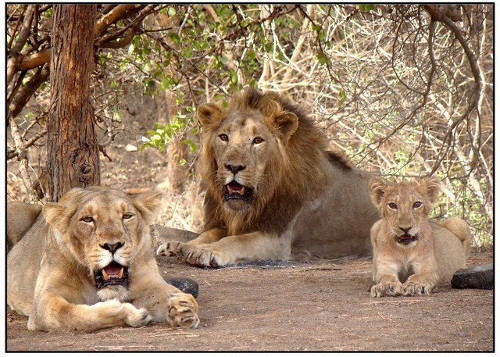
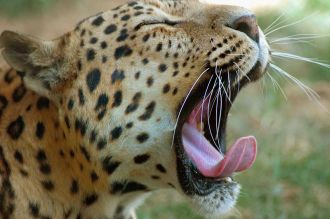
The Gir Sanctuary in Gujarat is the only place in India where the Asiatic Lion can be still found. Pic: Wikimedia commons
Mintar Singh was wanted in a case where 36 of his accomplices, who were arrested in Gujarat in August 2007, have already been convicted by the Gujarat courts. Half of them were women. Twenty people were arrested in Una, Junagadh district. A court there sentenced them to three years imprisonment and a fine of Rs.10,000 each. The other 16 people were arrested in the Bhavnagar railway station. The Bhavnagar metropolitan court sentenced them to four years imprisonment and a fine of Rs 2,000 each. All of them were convicted under provisions of both the Indian Penal Code (IPC) and the Wildlife (Protection) Act, 1972.
Singh will now face trial in Gujarat. Mintar Singh appears to be a Katni tribal. The Bahelias, Bawarias, Pardhis, Katnis are all tribes who are traditionally hunter gatherers who have specialised in trapping and ensnaring wild animals. Marriages and inter-mixing over centuries has made tracing the roots of individuals among these forest dwelling tribes extremely complex. A Government of India dossier put together after the Sariska slaughter mentions scores of wildlife crime cases against Bahelias, Pardhis, Bawarias, and Katnis, many of whom were Sansar Chands minions in his wildlife crime activities in the Sariska Tiger Reserve.
Mintar was the only person arrested on 10 May. He is said to be the leader of the gang and the Gujarat CID had an arrest warrant for him, says Belinda Wright the Executive Director of WPSI in New Delhi.
From tigers to lions
After the tragic Sariska slaughter of all the 22 tigers in 2004 conservationists feared that the poachers including Mintar Singhs group -- would move south because there were no tigers left in the north Indian tiger reserves. But they struck lions in March-April 2007 in its last bastion the Gir National Park. The endangered Asiatic Lion is found here, of which only 250 or so remain making it even more threatened than the Royal Bengal Tiger.
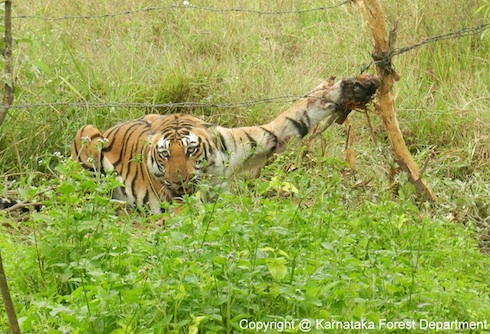
The poachers had used spring iron traps, usually used to kill tigers, to trap the lions. After they had trapped a lion, they used poisonous spears which they inserted into the lion's mouth and anus to kill the lion. They then quickly skinned the lion, removed the meat from the bones, and took away the skeleton, claws, etc. Their interest was in the bones, and the skins of the lions were left behind in the forest and roughly buried.
 |
As in most wildlife crime cases, recovery of material evidence is a casualty because the meat of wild animals decomposes rapidly in tropical environs. These were important cases because there was little material evidence. An iron spring trap, poaching equipment, carry bags, salt, matchboxes (from Madhya Pradesh), etc. were seized, says Wright. However, blood from lions was found under the gang members finger nails by the police.
Other thorough field investigations (which WPSI's Director for Central India also assisted in, in Gujarat) clearly proved that they had been responsible for the death of the lions, Wright adds.
In August 2007, Gujarat Police who were investigating the lion poaching case found evidence that the Hakki Pikki tribes from Karnataka were co-conspirators, according to K S N Chikkerur, the former Deputy Inspector General of Police, Forest Cell. Hakki Pikkis are off shoots of Bawarias who migrated to the south centuries ago.
The same Hakki Pikki tribes were part of the poaching mafia led by Prakash Gajakosh, a former forest department contractor who was caught in December 2007 with 20 leopard skins, 3 tiger skins, and more, by Chikkerur. Gajakosh is currently in the custody of Gujarat Police too.
History of poaching in Gir
- In 2001, forest department nabbed members of the Katni gang who were involved in poaching in the Gir. The gang members were nabbed from Patla village of Dhari Taluka and Dedkadi village near Sasan.
- In May 2003, poachers from Madhya Pradesh were arrested from Jambudi railway station near Satadhar.
- In May 2004, some poachers were caught with skin of a lion.
- In the same year, some poachers were caught with a lion they had trapped.
- In 2007, some members of the Katni gang of Bahelia district reportedly killed a lion in the sanctuary.