




INDIA TOGETHER
 Mon 23 Nov 2009    The news in proportion.
NEWSLETTER
DIGITAL EDITION
PLEASE CONTRIBUTE
HOME OPINIONS SEARCH SUPPORT
NEWSLETTER
AGRICULTURE
Agriculture issues page
GE/GM
Hunger
Links
Livestock
Opinions
Organic
Policy
Trade

RSS Feeds 
 
SERVICES
Advertise
Contact Us
Newsletter
Submit

REGULATING GM FOODS
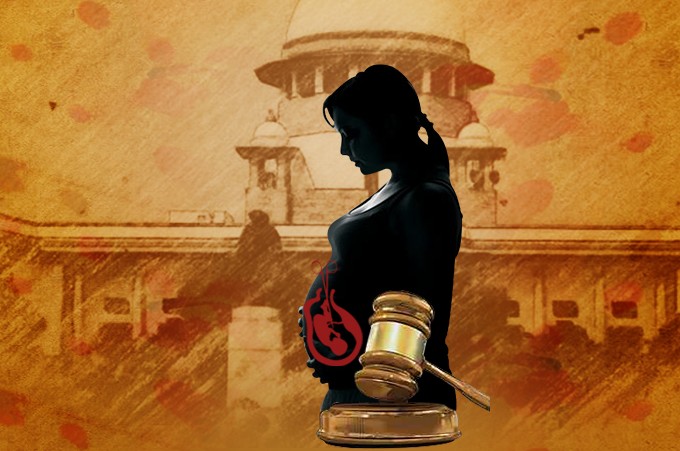
SC to look into deregulation of GM food imports
Following Gene Campaign's challenge to the government's decision to withdraw all existing regulatory oversight over the import of GE foods, the Supreme Court has issued notices to the Centre, writes Suman Sahai.

 •  Write the author
 •  GM Crops
 •  Send to a friend
 •  Printer friendly version
26 November 2007 - The Government of India had issued a notification on 23 August, 2007, which came into effect on 11 September, 2007, withdrawing all existing regulatory oversight over the import of GE foods. This development allows the import of GE foods without the importing agencies having to take any permission from regulatory agencies, as has been the case so far. The new notification exempts importing agencies from even informing the government.

Gene Campaign has filed a writ petition in the Supreme Court challenging the notification issued by the government. Gene Campaign had appealed to the Court to strike down the notification since it is "unconstitutional, being violative of Articles 14 and 21 of the Constitution". Gene Campaign had further requested the Court to strike down the new provisions since these give uncanalised power to the government; which power is likely to be abused and is therefore violative of Article 14 of the Constitution.

The Supreme Court of India has heard the matter on 19 November and issued a notice to the Government of India on the petition. The Court issued a further notice on Gene Campaign's application that a stay be granted on the notification till the issue is finally decided. This means that the government has been put on alert that the Supreme Court is now watching the deregulation of GM foods.

Until now, in view of the known health risks that are associated with GE foods, the government guidelines have required that import of GE foods can only take place with the express permission of the apex regulatory body in India, the GEAC ( Genetic Engineering Approval Committee), Further, any handling of GM foods was to be done only after these were labeled as such.

The regulatory oversight that existed prior to the government's new notification was necessary and appropriate since it had allowed India to monitor the entry of food products produced by a new technology that is known to produce toxic and allergic compounds. The Indian regulations which made it necessary for permission to be taken from national agencies, allowed government to monitor the entry of GM products into the country. These regulations had also allowed India to maintain vigil that food products rejected by other countries in Europe, Africa and Middle East are not in fact being dumped on us.

There is no law in the country that can fix responsibility and claim compensation if something should go wrong with the environment or with animal and human health, from the cultivation and consumption of genetically engineered crops and foods.


 •  GEAC's poor record of regulation
 •  Secretive and hasty policy

The arbitrary withdrawal of the regulatory oversight without any scientific reason and without any consultation with a range of stakeholders that are engaged with GE technology and policies associated with it, is a dangerous development. It will benefit the producers and exporters of GM foods, like the US and pose health dangers to the Indian population.

Such a move is inexplicable, especially at a time when scientific evidence is mounting from laboratory tests in various parts of the world, that genetically engineered foods can in fact cause serious damage to health. Confronted with this scientific data, we need to upgrade our food testing systems and make them more stringent and comprehensive, not dismantle them, as the government is doing. It is incomprehensible that instead of strengthening our systems to ensure that no foods reach the market that have the potential to damage health, the government has decided to withdraw all opportunities to test and regulate such novel and controversial foods.

Not only is it dangerous to make the system lax from the health point of view, it is a matter of considerable concern that unfettered access to unknown foodstuffs is being allowed in the absence of a legal regime for liability and redress. India has still not introduced a law on liability for this sector, even though it is required to do so by the Cartagena Protocol on Biosafety. This means there is no law in the country that can fix responsibility and claim compensation if something should go wrong with the environment or with animal and human health, from the cultivation and consumption of genetically engineered crops and foods.

The new notification of the Ministry of Environment and Forests will in effect provide unrestricted entry to untested foods of dubious origins, especially since the imported GM food does not have to be labeled. This denies consumers the right to exercise free choice in the matter of the food they wish to eat. This unfortunate move is therefore in violation of the Consumer Protection Act of India that grants consumers the right of informed choice.

The government's notification also goes against India's long standing commitment to mandatory labeling of GE foods, a position the Indian delegation has consistently maintained in international negotiations, particularly at the WHO-FAO led Codex Committee on Food Labeling.

Suman Sahai
26 Nov 2007

Dr Suman Sahai is Director of Gene Campaign, based in New Delhi.

 •  Write the author
 •  Post a comment on this article
 •  GM Crops
 •  Reprint permissions

Comments (4)

  • Posted by Hitesh Varma,

    Sir/Madam,
    Nature takes millions of years to "evolve" and GE is interfering with the natures' forces without remembering that EVERY ACTION HAS AN EQUAL AND OPPOSITE REACTION. It is impossible to know all the "side-reactions" of the manipulations in the genes in the short-run.

  • Posted by Mohan,

    Dear all,

    It is now well-understood that USA will go any length to cripple India's agriculture so that they can dump their rice,wheat,cotton etc. in India.For example ,recent surge in acquiring fertile lands in West Bengal and rest of the country in the name of setting up factories.A group of politicians are taking money from USA.Eventually these factories will cease to exist( planned) leaving the lands permanenetly barren.We have to stop these developments to maintain our own countrie's food production.Otherwise soon India will be begging for food to america and will get trapped in a never -ending extortion.

    Beware fellow-countrymen.

    Please submit your views.Spread the fact.

  • Posted by Laxmi Narayana Paladi,

    GM foods in the world are in child stage. I think, hybrids also were subjected to criticism, when they came into existence. About the poor quality of GM foods is being talked by non-technical people mostly. It takes time to decide whether they are good or bad. Meanwhile great people like MS Swaminathan and Norman-E-Borlog can get it clarified.

  • Posted by Balaji Shankar,

    We have come to a stage in world polity, where all governments (big or small) are just handmaids of corporate giants and only serve the business interests of these Goliaths. Where the law is against exploitation of natural resources or consumers, these corporations simply lobby and bribe until they can arm-twist legislation to favor them. Monsanto was caught red-handed bribing Indonesian ministers and escaped with nothing more than a mild wrap on the wrists. The DeBeers diamond company in Botswana formed the diamond company Debwana, in partnership with the government, and displaced tribals whose lands contained diamonds. The socio-political problems from the privatisation of water in Boliva are well known. The examples are innumerable. Governments have become brazen all over the world. It is meaningless to try changing the government. So ae we doomed then?

    No, things are not so bad as they seem. We individuals can make a difference and free ourselves from the clutches of corporations by conscious purchase decisions. What is needed to combat this mindless pollution of our seed,food and bio-diversity is for consumers to form local groups of 10-15 and get their food produced by nearby organic farmers in a Community Supported Agriculture (CSA) model. Small scale entrepreneurs should take up local processing and distribution of organic food (food that has not traveled more than 100 km). Common people should go to PTA meetings and other local gatherings and inform others of the threat to their and their children's survival.

    Today if there is one thing that can save our country it is organic farming and allied local industries. I am myself an organic farmer and I am also trying to promote organic farming in Tamil Nadu and the main hurdle we face is the absence of proper marketing channels for pure organic food. While there is produce and also consumers, we lack the finance to buy and stock from the farmer and distribute to end customers. In today's consumer centric economy, the consumer is still the king. The corporations flourish by making it exceedingly difficult for the consumer to buy genuine farm-fresh food. It is possible for end consumers to make a difference by boycotting processed or packaged foods and going the extra mile (sometimes literally) to buy organic food.

    Those of you who have some space in your house should volunteer to stock and distribute organic food. You should also try and get a small client base that will come on week-ends to your house to buy and then you take the responsibility of collection and payment to the farmer directly. We are already doing these from our village to Chennai and all the volunteers are school teachers in The School KFI. An ounce of action is much better than pounds of goodwill or talk.
    Righteous indignation bakes no bread. A little bit of dough-kneading goes a long way.

    Before we start lambasting Monsanto or the Government, how many us sponsor the Khadi Gramodyog Bhawan? How many of us buy the excellent cosmetics they sell or the clmate-friendly khadi cloth?

    Controlling our destiny is in our hands.


Post a comment
Note: Your comment will appear within 24 hours unless found inappropriate (spam, netabuse).
See policy


Note: If you do not wish to post a public comment here and instead want to write a letter to the author directly, use the Write the author link that follows the author's byline at the end of the article.


Remember personal info?


For verification, please enter the security code you see below


View posted letters (4)
Note: Your post will appear within 24 hours unless found inappropriate (spam, netabuse). See policy

Comments powered by Movable Type 2.64 


In India
India Together
1677, 17th Main
JP Nagar II Phase
Bangalore
560078
Outside India
India Together
PO Box 26254
San Diego CA 92196
USA

Charge to your credit or debit card using the secure e-payment gateway of PayPal from anywhere.
Contribute now

HDFC Bank
Account Number 01332000003849
Account name: Civil Society Information Exchange
Account type: Current A/C
J P Nagar Branch, Bangalore
IFSC code: HDFC0000133

Articles in related topics
GM CROPS
- Persisting on two left feet
- Bt Cotton farmers alert this year
- Understanding the Bt Cotton maze
- Biotech policy: secretive, hasty


free public affairs ads. (join).


RECENTLY IN INDIA TOGETHER
 •  Our view, their view, the world-view
 •  Where Suvarna Jala fails, schools leap ahead
 •  CIC: Jobs for the boys
 •  K Balagopal - The honest leftist
 •  Running wild with the Biodiversity Act
 •  Film review: The spoofs of Malegaon
 •  Between a village and a town
 •  Rain pond to the rescue
 •  Making ends meet, in the wake of the Narmada dam
 •  GM crops: Where is the science?
 •  Nobel for ostrom: Are Indian policy-makers listening?
 •  Varanasi weavers get GI protection
 •  1984 - Twenty five years later
 •  Bundelkhand - Living with drought
 •  A Kerala land struggle is settled, questions remain
 •  In TN, poor parents pushing children into English schools
 •  Lakshmibehn's legacy of loss
 •  Need to strengthen climate diplomacy
 •  Narmada refugees: Living on the edge
 •  A miner's shortcut to green clearance goes awry
 •  Electricity Act: The power to protect rivers
 •  A job for an infantryman
 •  Study the impacts first, says Delhi HC
 •  Film review: Hope dies last in war
 •  Sainath: The winter of our austerity
 •  Guha: The beauty of compromise
 •  A limited 'tribute' to an unlimited legacy
 •  Emissions of the rich and famous
 •  Narnaul - Saved by the women
 •  How not to remember Bapu


© Civil Society Information Exchange Pvt. Ltd., all rights reserved.
Home | About us | Overview | Support | Contact Us | Disclaimer