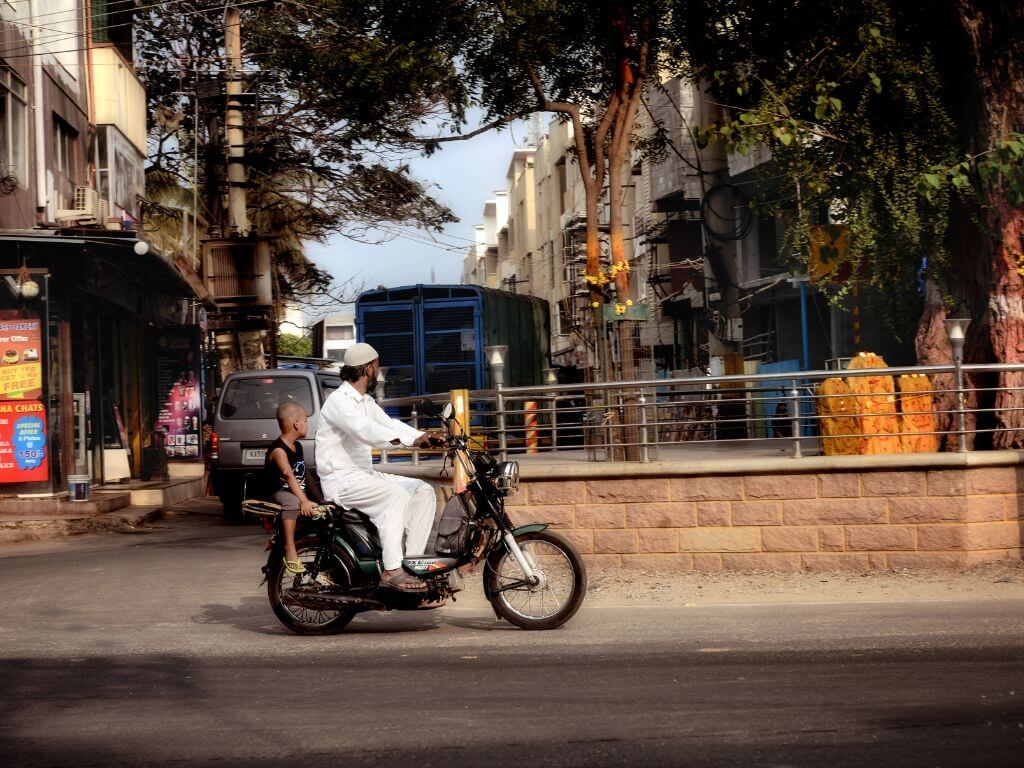






The Centre's Jawaharlal Nehru National Urban Renewal Mission (JNNURM) is being talked about as manna from heaven for the nation's mega-cities bursting at the seams. The Rs.125,000 crores promised under the program, it is hoped, will provide relief from the grid-locked traffic, overflowing garbage, choked drains, queues for water, filthy slums, tattered tents of migrants on pavements, and more. These changes are certainly needed, but can JNNURM deliver them?
Centre's role - enabling, but contradictory
The rationale is that cities are currently inefficient in raising resources to meet their growing needs; governance in the cities is also not adequately geared to respond to the challenges. The Centre's twin-track response to this is to bail out the cities with funds from New Delhi, but link these funds to conditions - cities must carry out certain governance reforms (some mandatory and some optional) which will make them self-sustaining and efficient in the future. For this, the Centre has set up a sub-mission on Urban Infrastructure and Governance.
The Centre is also under pressure to ensure that the Millennium Development Goals - for halving hunger, reducing poverty and ensuring water and sewerage to all - are reached. With 23.6% of the urban population in the country being below the poverty line and 14.1% living in slums, providing Basic Services to the Urban Poor (BSUP) is the objective of the second sub-mission under JNNURM.

•
Our best hope for urban India
•
For the people, by diktat
•
Bangalore: Whither the future?
 The enabling role that the Centre is attempting, however, contains significant contradictions. One reason that cities now have inadequate finances to improve themselves is that they have not derived the necessary funds from higher levels of government. Both the Centre and the States have paid little attention to finances of local governments, preferring instead to keep revenue control with themselves. As per the recommendations of State Finance Commissions (SFCs) set up under the 74th Constitutional Amendment (CA), cities should have got a fair share of the funds with the states, but this has simply not been happening. Most recommendations of the SFCs are gathering dust on the shelves of the government.
Anachronistically, the very first mandatory reform suggested under JNNURM is the implementation of the 74th CA; only cities that implement the amendment will be eligible for NURM funds! These are the very same funds that were supposed to be given to cities as untied funds for them to use as they wish, with no strings attached, as the very spirit of the 74th CA is that local bodies should become bodies with a will of their own.
Cities at fault too
But one has to also accept that, like self-willed but immature children, city governments are not doing all that they can for their citizens; hence a little bit of disciplining might be perfectly in order. The current bane of all municipal budgeting is that it gets hijacked to serve the interests of the elite (in urban infrastructure it goes mainly to support the needs of the private car-based economy) in the form of fly-overs, expressways, etc., a la big dams in rural areas. The Bangalore Mahanagara Palike (BMP), for instance, routinely budgets funds for slum improvement which never get used. The building of convention halls, shopping arcades, multiplexes and golf clubs with JNNURM funds is currently on the priority wish-list of Karnataka.
Considering the state of many municipal accounts, wherein the opening balance often does not correspond with the previous closing balance and audits have not been conducted for decades, there may not be much opposition from the people to the Centre imposing some 'technical' conditionalities, such as the adoption of a Fund-Based Accounting System (FBAS), e-governance and GIS for universal property tax coverage, etc., though some activists fear elite manipulation in this too.
Not all conditionalities are the same
But conditionalities which impose contested policy changes - such as those prescribing on what items money can be spent; making full collection of user fees for public services mandatory (without a clear enunciation of a policy regarding these for the urban poor); requiring repeal or introduction of certain laws, such as the Urban Land Ceiling Act; initiating public-private-partnerships for public services - appear to be a direct infringement of States' freedom, and the spirit of the 74th Amendment. Critics see the imposition of conditions on municipalities to privatise their services as "seriously undermining the federal and democratic nature of decision-making in India".
Dr. A Ravindra, former Chief Secretary of Karnataka, says states were not even allowed to choose the cities which were to benefit from JNNURM. This is a gross violation of the federal nature of Centre-State relations, and a return to centralisation rather than decentralisation, he felt.
Privatisation of public services, usually done through public-private partnerships, is especially controversial. There is no mention in JNNURM of a policy for the urban poor - whether certain services will continue to be provided free to them, for instance, a minimum quantity of water for subsistence, as a human right. The governments' refrain has always been, "From where will the funds come, unless we bring in private investment?" But well-documented examples from Latin America show that privatisation is not a panacea, and that there are other ways of overcoming the states inefficiencies and corruption, e.g. through citizens' cooperatives that run the services. Opponents of privatisation also ask, 'if obligatory functions of the state, such as water supply, solid waste management, primary education and primary health care, etc., are to be privatised, then what are taxes for?'
Dodging mandatory reforms
But will the conditionalities be met? JNNURM does not appear to care very much. The Mission asks that a vision document for each city, as well as City Development Plans (CDPs) be prepared through multi-stakeholder consultations. In Bangalore, nothing of this sort happened; the BMP conducted ad-hoc consultations on May 6th, which were attended by about 25-30 persons from each Range of three to four wards, and the urban poor were hardly represented (a councillor claimed that he was there to represent the absent urban poor's interests). Going by the perfunctory nature of this consultation, how is it going to be ensured that all stakeholders' views will be adequately taken into consideration? Critics point out that the plans are being made without clear "process guidance, adequate and up-to-date planning data, advocacy with stakeholders and their capacity building in order that they may participate effectively".
The linkage of the current plan with other statutory plans is also not clear, though congruence between all plans is promised, warn critics. For instance, what happens in cities such as Bangalore, where a CDP was already prepared for the BDA by foreign consultants in a top-down manner with no inputs from the people? Is it going to be abandoned after it has swallowed crores of rupees? This time around too, under JNNURM, other empanelled consultants are waiting in the wings to put together the new CDPs prepared largely by bureaucrats but supposedly as per the suggestions of a handful of residents at the token consultations.
Similarly, as per the 74th Amendment, planning is a function of District Planning Committees and Metropolitan Planning Committees. These have not even been established in most states - a gross violation of the Constitution. If these are not made functional before the City Development Plans are finalised under JNNURM, the legitimacy for the ad hoc planning process is questionable.
No funding for basic needs
Among the items for which no funds under the JNNURM can be sought are primary health, primary education, employment opportunities and social security in short, the very items that need focus to foster human development to meet the MDGs - and not just economic growth. Currently, the urban poor are forced to go to private schools and hospitals that they can ill afford because public provisioning of these is in shambles. These may be the areas that a city would like to invest in, but these are to be financed only through the existing departmental budgets which everyone knows are inadequate.
Similar exclusions abound. Land is being freed to ensure that investment funds flow towards the high-end sectors, but land for securing the livelihoods of the urban poor by providing the space for carrying on their trades, etc. is missing. Social security is to be provided under 'existing universal schemes', but there are no such schemes for the unorganised poor.
The most crucial element of JNNURM, however, is the requirement for the local bodies of mega cities to raise 50% of the funds themselves and for the State governments to cough up another 15%. Only then will the 35% in the form of grants from the Centre under JNNURM be released. Considering that the BMP prepares illusory budgets year after year - it has prepared a budget for 1,870 crore for 2006-07 though it was able to raise only Rs. 912 crore (58.47 achievement %) from all sources against its desire to spend Rs. 1,575 crore in 2005-06 - the big question is: from where will BMP raise the Rs.7000 crores (50% of Rs.14,000 crores allotted to Bangalore) in the next seven years? BMP raised only around Rs.258 crores in 2005-06 from property tax. It was able to raise about Rs.205 crores in the form of loans in 2005-06. According to sources within BMP, the property tax from three of BMP's 30 Ranges is already going towards interest payments on loans. In 2005-06, the BMP was able to raise only about Rs.77 crores towards repayment of long-term loans.
One can imagine the fate of the BMP if it has to pay interest on Rs. 7,000 crore to get the money under JNNURM. The only other alternative will be for the citizens to tighten their belts and be prepared to pay higher property taxes, cesses, users' fees, privatisation costs, et al, if they want their wish-list for Bangalore to be actualised.
Critics feel that the Centre knows that the cities will never be able to raise their share. And if the fate of crores of rupees promised by the Centre to the state governments under Sarva Shiksha Abhiyan, which have lapsed - because the states failed to provide their share of 20% - is anything to go by, the State governments may not be able to cough up their 15% share of the funds for JNNURM either.
So, how will the Mission work, if the states lack the funds needed to participate and don't have the desire to implement the necessary changes? Activists fear that the real intention of the Centre in dangling the promise of Rs.125,000 crores is to force the local bodies to undertake the neo-liberal reforms that it wants them to, viz. free the land market, undo the checks and balances that prevent concentration of land in the hands of a powerful few, recover full O & M costs through users' fees, etc. Another intent may be to force local bodies to go with a begging bowl to International Financial Institutions to raise their share of funds. These institutions - who are currently the shadow players behind the Mission - will, in turn, demand their pound of flesh, usually further conditionalities to privatise public services.
There is also the benign talk of providing security of tenure to slum-dwellers. Critics fear that this very commitment may be used to disqualify and evict several alleged 'illegal' slum-dwellers on the possible ground that they have migrated after arbitrarily set cut-off dates, or that they are tenants or sub-tenants, and lead to new forms of exclusion. Since demolitions and forced slum evictions in the major cities have met with loud outcries and even reprimands from the UN, the tactic appears to be to camouflage the same intentions under a shiny wrapper of benign benevolence. It is significant that the JNNURM document nowhere gives an assurance that evictions and demolitions will be stopped, which is a solemn commitment made by the UPA in its Common Minimum Programme.
Doing it right
But all this need never be. For JNNURM, it is still possible to implement the mission in accordance with constitutional provisions, and in a truly enabling way. Many civic groups have proposed steps to ensure this, among these steps are that:
-
Implement the 74th Amendment in totality (along with necessary changes suggested above) over a period of one to one and a half years before initiating preparation of the Vision Documents and CDPs for the cities. Also, implement only those reforms agreed to by cities and States.
-
the resources required to meet the water, sanitation housing and other needs of all those living in under-privileged areas should be realistically estimated and made the first charge on any resources that municipalities are able to raise under JNNURM.
-
compulsory city stakeholder meetings should be held at each stage of preparation of the CDP, publicizing activities and outcomes through website and newspapers and acceptance of proposals developed through genuine consultation.
-
All CDPs must be assessed based on the guidelines laid down by the National Slum Policy, National Housing and Habitat Policy and National Street Vendors Policy. A solemn commitment should be made that there will be no slum demolitions and evictions.
-
Area and Basti Sabhas must play a forefront role in planning and monitoring the implementation of the CDPs in each city.
-
Funds to be devolved as untied funds to ward committees to implement their area development plans. Funds to be allowed to be used for strengthening primary education, primary health care and social security to the urban poor.
-
Updates on the status of preparation towards and implementation of the JNNURM across the country should be displayed on the GOI website. This includes the status of funds, its allocation and expenditure under the scheme. The website must also enable citizens and civil society groups to provide direct feedback to the National Steering Committee on the implementation of the Mission across cities.
-
A policy for the urban poor ensuring them free, or almost free, basic services needs to precede all policy changes.