





HIGHLIGHTS OF THE BILL
(Read this section in detail)
-
The Scheduled Tribes (Recognition of Forest Rights) Bill, 2005 seeks to recognise forest rights of forest dwelling Scheduled Tribes (FDSTs) who have been occupying the land before October 25, 1980.
-
An FDST nuclear family would be entitled to the land currently occupied subject to a maximum of 2.5 hectares. The land may be allocated in all forests including core areas of National Parks and Sanctuaries.
-

This page is organised as follows: The highlights of the Bill and the key issues to be considered are listed briefly first; the details of each are presented thereafter. Click here to see the highlights in detail, and here to see the detailed analysis of key issues. In core areas, an FDST would be given provisional land rights
for five years, within which period he would be relocated and
compensated. If the relocation does not take place within five
years, he gets permanent right over the land.
In core areas, an FDST would be given provisional land rights
for five years, within which period he would be relocated and
compensated. If the relocation does not take place within five
years, he gets permanent right over the land.
-
The Bill outlines 12 forest rights which include the right to live in the forest, to self cultivate, and to use minor forest produce. Activities such as hunting and trapping are prohibited.
-
The Gram Sabha is empowered to initiate the process of determining the extent of forest rights that may be given to each eligible individual or family.
KEY ISSUES AND ANALYSIS
(Read this section in detail)
-
There are no reliable estimates of the likely number of eligible families although the Bill proposes to vest forest land rights to FDSTs. Therefore, it is not known whether there could be significant risk to existing forest cover.
-
If FDSTs in core areas are not relocated within five years, it could lead to loss of forests, which are crucial to the survival of certain species of wildlife. Large-scale relocation, on the other hand, could result in possible harassment of FDSTs.
-
Communities who depend on the forest for survival and livelihood reasons, but are not forest dwellers or Scheduled Tribes, are excluded from the purview of the Bill.
-
The Bill specifies October 25, 1980 as the cut-off date to determine eligibility. However, it does not clarify the kind of evidence that would be required by FDSTs to prove their occupancy.
-
Terms such as 'livelihood needs' have not been defined. This could lead to litigation and delay in implementation.
Context
The Scheduled Tribes (Recognition of Forest Rights) Bill, 2005 was drafted to fulfill the need for a comprehensive legislation to give due recognition to the forest rights of tribal communities [1]. These rights were not recorded while consolidating state forests during the colonial period as well as in independent India.
Recognizing the symbiotic relationship between tribal people and forests, the National Forest Policy, 1988 [2], made provisions to safeguard the customary rights and interests on forest land of tribals. In order to implement these provisions, the Ministry of Environment and Forest (MoEF) issued a set of six circulars [3] on September 18, 1990 which decreed that pre-1980 occupation of forest land would be eligible for regularization provided the State Government had evolved certain eligibility criteria in accordance with the local needs and conditions. The State Governments, however, failed to implement the 1990 Guidelines.
Meanwhile, a Supreme Court order [4] led to large scale evictions by the Forest Departments of various states. Following mass protests by tribal communities, the MoEF issued supplementary guidelines on February 5, 2004 to address the issue of recognizing the legal right of tribal communities to forest land and resources. However, the Supreme Court issued a stay order on the Guidelines.
Key features
-
Rights of Forest Dwelling Scheduled Tribes
The Bill seeks to recognize and vest forest rights in forest dwelling Scheduled Tribes (FDSTs), where they are scheduled, with respect to forest land and their habitat. The forest rights in the core areas of National Parks and Sanctuaries shall be granted on provisional basis for a period of five years from the date of commencement of this Act. If the holders of such rights are not relocated within five years with due compensation, the rights would become permanent. The rights can be inherited but they are not transferable.
The Bill delineates 12 rights of FDSTs over a variety of subjects. The rights include: (a) living in the forest for habitation or for self cultivation for livelihood, (b) community rights such as nistar (the right of a resident of a village in respect of cattle grazing and collection of jungle produce), (c) right to own, use or dispose of minor forest produce, (d) conversion of forest village to revenue village, (e) conversion of pattas or leases issued by any local authority or any state government on forest land to titles, and (f) other traditional customary rights. Customary rights exclude hunting, trapping or extracting body parts of any wild animal. FDSTs also cannot indulge in any activity that adversely affects wild animals, forests and the biodiversity in the local area and need to ensure that adjoining catchments areas and water sources are adequately protected.
Forest rights of FDSTs would be subject to the condition that such communities had occupied forest land before October 25, 1980 [The Forest (Conservation) Act, 1980 came into force on this date]. The Bill specifies that no FDST shall be evicted from forest land under his occupation till the recognition and verification procedure is completed.
The Bill states that forest rights would be vested on such land which is occupied by an individual or family or community when the Act comes into force. The rights would be restricted to the area under actual occupation and shall not exceed an area of 2.5 hectares per nuclear family. The title would be registered jointly in case of married persons and in the name of the single head in case of single member households.
Forest rights would be conferred free of conditions such as Net Present Value (NPV) and compensatory afforestation for diversion of forest land [5]. Under the Forest (Conservation) Act, 1980, the state government or any other authority cannot divert forest land for non-forest purposes without prior approval of Government of India. In case it is diverted, a certain amount of money (NPV of the land) has to be deposited with the government for purposes of compensatory afforestation, and the State government has to keep aside a proportionate area of land for afforestation.
-
Authorities for Vesting Forest Rights
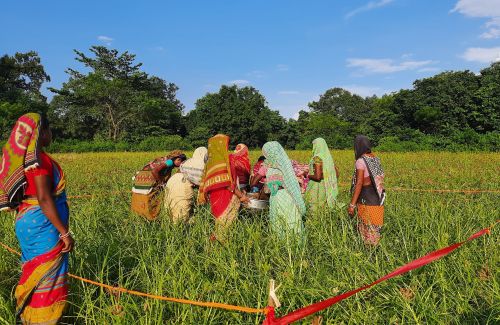
The Gram Sabha, a village assembly of all adult members of a village, shall have the authority to initiate the process of determining the nature and extent of individual or community forest rights that may be given to FDSTs within the local limits of its jurisdiction under this Act. The Gram Sabha is empowered to receive claims, consolidate and verify them, and prepare a map delineating the area of each recommended claim in such manner as may be prescribed for exercise of such rights. It would then pass a resolution to that effect and forward a copy to the Sub-Divisional Level Committee (SDLC).
The SDLC, which shall be constituted by the State Government, would examine the resolution passed by the Gram Sabha and prepare the record of forest rights. It would then be forwarded to the District Level Committee (DLC) through the Sub-Divisional Officer for a final decision. The DLC would be the final authority to approve the record of forest rights prepared by the SDLC.
A State Level Monitoring Committee would be formed to monitor the process of recognition and vesting of forest rights. The Committee would submit returns and reports to the nodal agency (the ministry dealing with Tribal Affairs). The SDLC, DLC and the State Level Monitoring Committee would consist of officers from the departments of Revenue, Forest and Tribal Affairs at the appropriate level as may be prescribed.
If a person is not satisfied by the ruling of the Gram Sabha, he can file a petition to the SDLC who would consider and dispose of such petition. If a person is not satisfied by the decision of the SDLC, he can petition to the DLC within 60 days of date of decision of the SDLC. The DLC's decision would be final and binding.
-
Penalties for Offences
In case a person is found guilty of contravening or abetting the contravention of the provisions of the Act, engaging in unsustainable use of forest or forest produce, killing any wild animal or destroying forest or any other aspect of biodiversity or felling trees for any commercial purpose, he shall be punished with a fine which may extend to Rs 1,000. In case the offence is committed more than once, the forest rights of the guilty person would be derecognized for such period as the DLC, on the recommendation of the Gram Sabha, may decide. The penalty would be in addition to any other law for the time being in force.
If members or officers of authorities and committees commit an offence, they would be deemed guilty and can be fined up to Rs 1,000.
PART B: KEY ISSUES AND ANALYSIS
The Scheduled Tribes (Recognition of Forest Rights) Bill, 2005, aims to recognize and enforce the rights of FDSTs to forest land and resources. The main challenge of the Bill is to harmonize the potentially conflicting interest of recognizing forest rights of FDSTs while protecting forests and wildlife resources. Lack of data

•
Ecology for the people
•
Forest fights, Indian style
•
Understanding encroachment
•
Their lands, our laws
Although the Bill proposes to recognize and vest forest land rights to FDSTs, there are no reliable estimates of the
number of families who will be benefiting from the proposed legislation. Secondly, although the government
estimates that there are around 2-3 million people living inside India's protected areas (national parks and
sanctuaries) [6], there is no census of the number of FDSTs residing within the core areas of national parks and
sanctuaries [7]. Therefore, it is not possible to calculate how much forest land would be required in order to
implement the provisions of the Bill.
Tribal Rights vs Environmental Conservation
-
Differing Viewpoints
There are three main streams of thought regarding this issue. Some experts say that tribal communities have lived in forests for centuries, and granting them the formal right over forest land is just undoing a historical injustice. On the other extreme, some conservationists say that certain species of animals (such as the tiger) cannot co-exist with humans, and there is a need to reserve at least some parts of forests to conserve these species. They also say that increased human habitation in forests will cause depletion of forest cover, resulting in significant ecological costs. A third view is that traditional forest dwellers help in preserving forests, and giving them land rights would actually help in ecological conservation [8]. However, there does not appear to be any clear evidence to conclusively support any of these views. Some of these issues are discussed below.
-
Allotment of Land
The Bill prescribes 2.5 hectares as the upper limit of forest land that an FDST nuclear family may be allotted. However, there is a possibility that it might result in elimination of legal protection for forest cover, which could lead to heavy ecological damage [9]. For instance, the possible depletion of watershed forests of Central India, which allow penetration of rain water into the sub soil, could lead to drying up of rivers such as Narmada, Tapti, Mahanadi, Godavari, Krishna, and Cauveri [10]. The counter-argument is that the Bill only seeks to recognize the forest rights of FDSTs who have been cultivating the forest land for generations. In any case, the total forest land under encroachment is estimated by the government at 13.43 lakh hectares [11], which amounts to about 2% of the recorded forest area in the country [12].
It is also possible that confiscating forest land from the tribal families, who possess more than 2.5 hectares of land, could lead to further impoverishment of tribal communities [13].
-
Core Areas
The Bill grants forest rights to FDSTs in core areas [14] of National Parks and Sanctuaries provided they are relocated within five years. If relocation does not take place within the prescribed time period, the holder would get permanent right over forest land. Therefore, there would either be large scale relocation of tribal communities or they would get permanent right over land in core areas.
Given India's poor track record in relocating people affected by development projects, such as the Narmada Dam [15], or from sanctuaries such as Sariska and Gir [16], the possibility of large scale relocation from core areas raises the spectre of loss of livelihood and hardship for FDSTs.
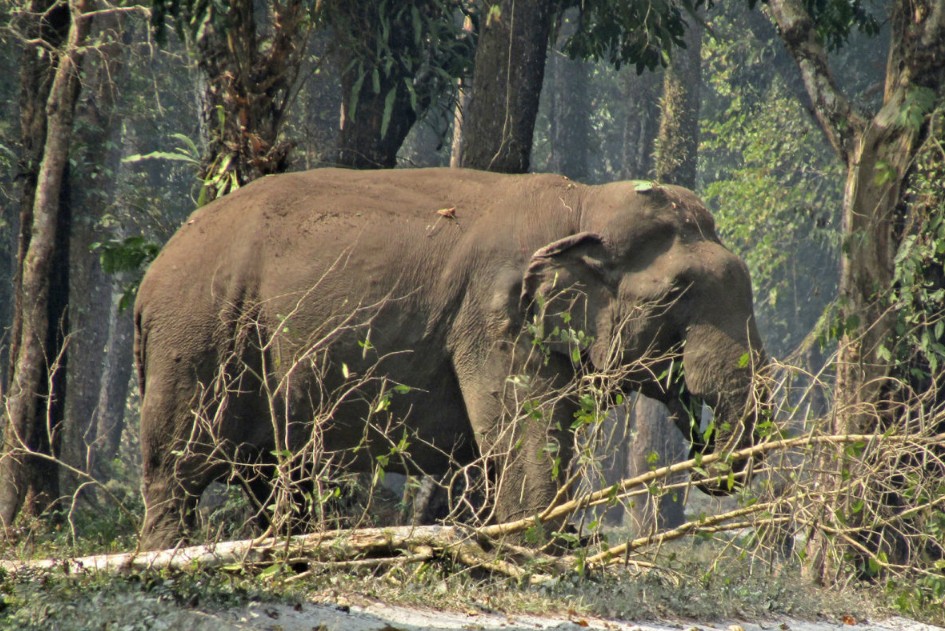
There could also be an argument against advocating coexistence between wild animals and tribal communities. Certain species such as tigers, rhinos, and elephants are vulnerable to pressures from human land use [17]. These species are typically large-bodied, slow breeding, need large areas, and vast resources for survival. Some experts argue that it might be more realistic to identify protected areas, which consist of National Parks and Sanctuaries (about 4.7% of India's geographical area [18]) as inviolate while areas outside such reserves could be utilised to serve the needs of tribal communities [19].
-
1980 'cut-off date'
The Bill takes October 25, 1980 as the cut-off date for vesting and recognizing forest land rights of the tribal community. However, the Bill does not specify the kind of evidence that FDSTs would require to prove their occupancy of forest land before 1980. Although states such as Maharashtra have adopted more effective procedures than just documentary evidences (oral testimonies, evidence of elders of the village etc.) for verifying claims [20], it is not mandatory for every state to adopt such practices. Therefore, there might be a case for specifying a set of admissible evidences in the Bill itself.
Also, it is unlikely that FDSTs would have the required documentary evidence to prove their occupancy over forest land before 1980 [21]. Thus, in order to minimize evictions, a case could be made for settling the claims of FDSTs on the basis of current occupancy of forest land.
-
Exclusion of certain communities
The Bill only recognizes forest rights of FDSTs who are defined as 'Scheduled Tribes who primarily reside in forests and includes the Scheduled Tribes pastoralist communities and who depend on the forests or forest lands for bona fide livelihood needs.' Other communities who depend on the forest for survival and livelihood reasons, but are not forest dwellers or Scheduled Tribes, for instance in large sections of Chattisgarh and forest tracts of Uttaranchal [22], are excluded from the purview of the Bill. This could lead to large-scale eviction of such people and increase social tension among the various forest communities.
The Bill also specifies that FDSTs would be granted forest rights only in places where they are scheduled. However, such a clause could lead to denial of rights to tribal communities on the ground that they do not reside in the area where they are scheduled even though many tribal people have been displaced due to development projects and creation of protected areas [23].
Role of Gram Sabha
Although the Gram Sabha has been given the power to initiate the process of determining forest rights, the final decision rests with the DLC. The DLC is also the authority that would decide the period for which an FDST's forest rights is to be derecognized in case of repeated contravention of the provisions of the Act. Although the Statement of Objects and Reasons of the Bill envisages involvement of democratic institutions at the grassroots level, the Gram Sabha does not have the power to recognize forest rights or enforce such rights.
Eviction and Relocation
The Bill does not place any explicit restriction on the methods that can be used to remove non-eligible forest dwellers. This is a concern, given the history of cases where brutal force has been used to evict tribal families [24]. The Bill mentions that FDSTs would be relocated from core areas of National Parks and Sanctuaries with due compensation. However, the Bill does not clarify exactly what kind of compensation would be offered to the tribal people, what recourse they would have if such compensation is not satisfactory or is altogether denied.
Definitions
Certain terms mentioned in the Bill have not been defined. It could lead to difficulty in implementing the provisions of the Bill. Clause 3 (j) mentions 'the right to protect, regenerate or conserve or manage any community forest resource which they have been traditionally protecting and conserving for sustainable use.' The term 'community forest resource' is not defined, and hence, it is not clear whether these also include resources within government owned forests including National Parks and Sanctuaries. The term 'nuclear family' has also not been defined, though each 'nuclear family' has a right up to 2.5 hectares of forest land. FDSTs are defined as those 'members or community of the Scheduled Tribes who depend on the forests or forest land for bonafide livelihood needs'. The term 'livelihood needs' is not defined which leaves the scope of activities allowed open to interpretation.
Penalties
The Bill imposes a fine of Rs 1,000 on FDSTs in case of contravention of provisions of the Act. If the offence is repeated, the person's forest rights might be derecognized for such period as decided by the DLC on the recommendation of the Gram Sabha. However, the Bill does not specify whether an FDST has the right to appeal such a ruling of the DLC to a higher authority (such as the State Level Monitoring Committee) other than to a court.
The member of a committee is also required to pay a fine of Rs 1,000 if found guilty of contravening the provisions of the Act. However, this amount might not be a sufficient deterrent.